
Planning a first trip to Egypt is exciting, but it also takes a little preparation. Distances between destinations are larger than many visitors expect, entry requirements depend on nationality, and a day of sightseeing can involve more logistics than simply arriving at a famous site.
This guide to Egypt for first time visitors covers the essentials: where to go, how to plan your route, what to check before departure, and how to make your time on the ground smoother. The quick advice is to choose a few destinations rather than trying to see the whole country, confirm entry and travel information from official sources, and allow extra time for transfers.
Quick checklist for first-time visitors
•Choose two or three main destinations based on your interests and trip length.
•Check visa and passport rules for your nationality using official sources.
•Plan intercity transport before you lock in a packed sightseeing schedule.
•Carry some Egyptian pounds for small purchases, while checking where cards are accepted.
•Pack comfortable walking shoes, sun protection, and modest clothing for religious sites.
•Read your government’s latest travel advice and purchase suitable travel insurance.
•Confirm exactly what a tour includes before paying.
Where should first-time visitors go in Egypt?
Cairo and Giza
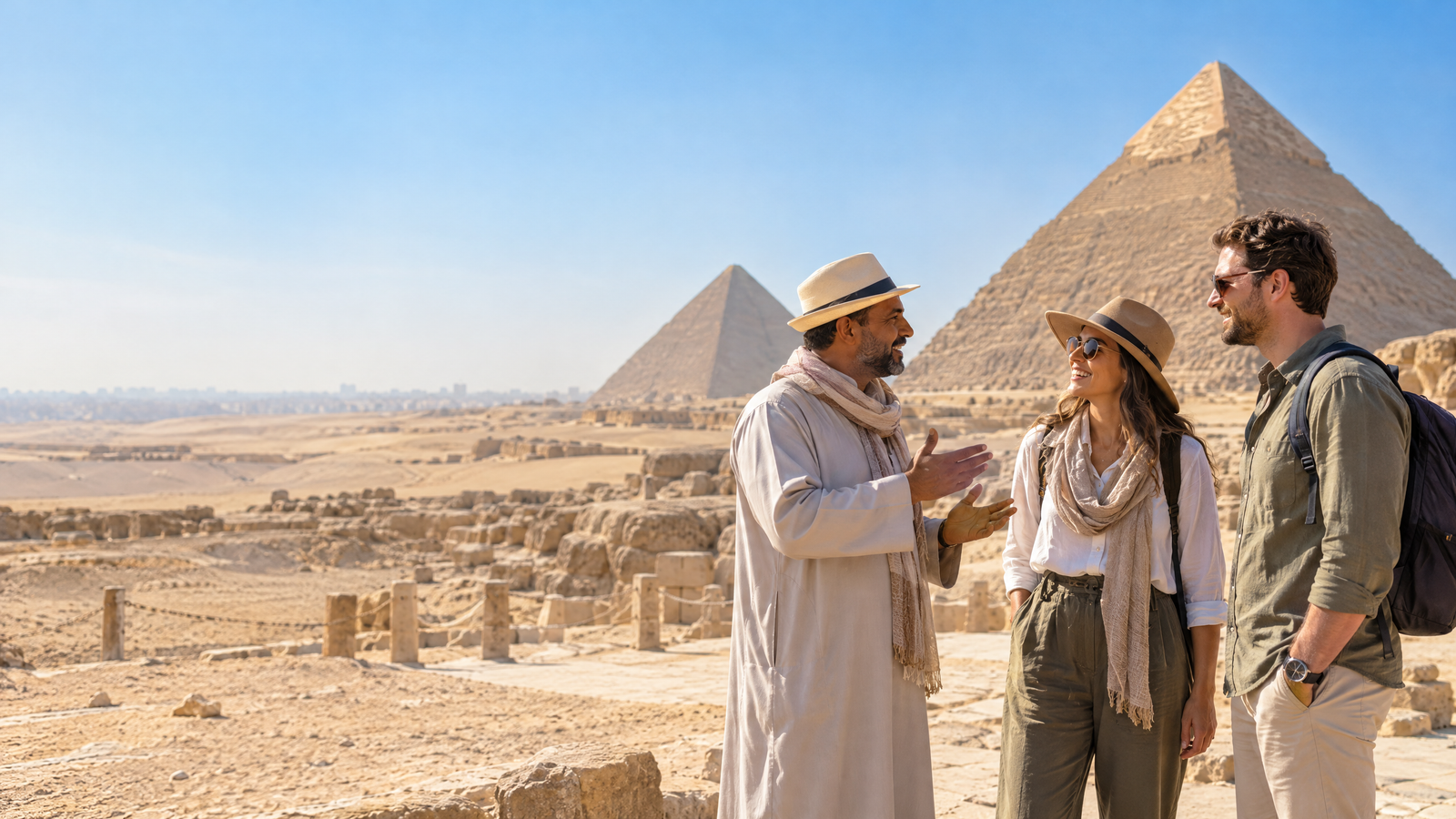
Cairo is a common starting point for international trips. Give yourself time for the Giza pyramids and Sphinx, as well as the city’s museums, historic areas, markets, and food. Avoid scheduling every attraction back-to-back; traffic and the size of the city can make transfers take longer than expected.
Luxor
Luxor is a strong choice for travelers interested in temples, tombs, and ancient history. Plan at least a couple of days if you want to see sites on both sides of the Nile without rushing.
Aswan
Aswan offers Nile scenery and a different pace from Cairo. It can be a destination in its own right or part of a southbound route with Luxor. Allow extra time for any out-of-town excursion rather than adding it to an already full day.
The Red Sea
If you want to relax, snorkel, dive, or stay by the beach, add a Red Sea destination such as Hurghada or Sharm El Sheikh. Remember that reaching the coast takes time, so include transfers in your itinerary.
Alexandria
Alexandria offers a Mediterranean setting and can be added to a longer northern itinerary. The official tourism website lists rail travel among the options connecting Cairo and Alexandria; check current schedules when planning.
How many days should you spend in Egypt?
For a first trip, 7 to 10 days is a useful starting range. It can allow time for Cairo and Giza plus Luxor or Aswan, depending on how you arrange transport. With 10 to 14 days, you can visit more than one area in Upper Egypt and add a Nile cruise or Red Sea break without squeezing every stop into a single week.
If you have only four or five days, focus on Cairo and Giza. A shorter, well-paced trip is usually more satisfying than trying to fit Cairo, Luxor, Aswan, Alexandria, and the Red Sea into a few days.
The official tourism portal lists domestic flights, trains, buses, ride-hailing services, and boats as ways to get around. Each option has different schedules and journey times, so check current availability before booking hotels around a tight connection.
Entry requirements and visas
Visa requirements depend on the passport you hold and your travel plans. Some nationalities may be eligible for an e-Visa or a visa on arrival, while others may need to arrange a visa in advance. Do not assume rules are identical for every traveler.
Check eligibility and application instructions on the official Egypt e-Visa portal. The portal says applications should be created at least seven days before departure. Confirm passport-validity rules, visa type, number of entries, and length of permitted stay with official Egyptian sources before you travel. Requirements can change.
Getting around: plan for distance and transfer time
Egypt’s main destinations are spread out, so choose transport based on the route, schedule, budget, and comfort you need. Domestic flights can save time on longer journeys. Trains connect several major destinations, and buses serve other routes. In Cairo and Alexandria, ride-hailing apps are widely used, according to the Egyptian tourism portal.
For each connection, confirm where you need to depart from, how long the journey takes, and whether you have enough time to reach the next hotel, tour, or flight. Avoid building an itinerary around a very tight connection, especially if separate tickets are involved.
For sightseeing days, agree on pickup details with your driver or tour provider in advance. Ask for the meeting point, contact number, expected return time, and what is included in the price.
Money, payments, and budgeting
Egypt’s currency is the Egyptian pound. The official tourism website notes that cards are accepted in major cities and tourist destinations, while cash remains useful for taxis and smaller shops. Check with your bank about foreign-transaction fees and carry only the cash you need for the day.
Your budget will depend on hotel category, meals, domestic transport, entrance tickets, and guided experiences. When comparing tour prices, check whether entrance tickets, meals, transfers, guide services, and tips are included. A lower headline price may not cover the same services as another itinerary.
What should you pack?
Pack comfortable walking shoes, lightweight clothing, sun protection, and any personal medication you need. A hat, sunglasses, and sunscreen are useful for outdoor visits. Bring a light layer for cooler evenings or air-conditioned transport, especially in the cooler months.
For mosques and other places of worship, dress modestly and follow local or posted guidance. Egypt’s official tourism portal recommends covering shoulders and legs at religious sites. A light scarf or cover-up can be useful to carry in your day bag.
Keep digital and paper copies of important documents, including passport, visa, travel insurance, hotel details, and tour confirmations. Check airline baggage restrictions and local rules for medicines and equipment before departure.
Local customs and respectful travel
A little cultural awareness can make interactions more comfortable. Ask before photographing people, follow instructions at religious and archaeological sites, and avoid photographing security or military facilities unless clearly permitted. Respectful clothing is expected in places of worship, and visitors should follow the rules posted at each site.
Tipping practices may differ from what you are used to. If you are unsure, ask your hotel or guide about customary gratuities for the services you use rather than relying on an assumed fixed amount.
Safety and health: check current advice
Safety conditions can change, and official travel advice may vary by nationality and region. Read the latest advisory from your government before booking and again before departure. As of October 2026, the UK Foreign, Commonwealth & Development Office listed areas where it advises against travel and warned that regional conditions may change. Other governments publish their own regional assessments, which may not use the same boundaries or warning levels.
During your trip, monitor local information, avoid demonstrations and restricted areas, use reputable transport providers, and follow instructions from local authorities. Consider travel insurance that covers your itinerary and planned activities. The U.S. State Department notes that medical and emergency services may be limited in some areas, particularly remote locations. Speak with a healthcare professional about personal medical needs before travelling.
This is general travel-planning information, not a real-time safety assessment. Always consult official updates for the places and dates you plan to visit.
Should you book a guided tour?
A guide can help explain historical sites, coordinate transport, and make a multi-stop day easier to manage. Guided visits may be especially helpful on a short first trip when you want to see several sites without arranging every transfer yourself.
Before booking, check the operator’s identity and credentials, itinerary, guide language, group size, transport, entrance tickets, meal inclusions, payment terms, and cancellation policy. Ask whether hotel pickup is included and where the tour ends. A tour is not a substitute for checking current official travel advice.
Ready to plan your first trip? Browse our Egypt tours and day trips or contact us with your travel dates, group size, and the places you want to visit. We can help you compare itinerary options and clarify what is included.
Frequently asked questions for first-time visitors to Egypt
Is Egypt a good destination for first-time international travelers?
It can be a rewarding trip, especially when you plan transport and site visits in advance. Choose a manageable itinerary, check official entry and travel information, and use reputable providers for tours and transfers.
What should I see on my first trip to Egypt?
Many first-time itineraries include Cairo and Giza, plus Luxor or Aswan. Add a Red Sea stay if you have enough time and want a beach break.
Is one week enough for a first visit to Egypt?
One week can work for a focused itinerary such as Cairo and Giza plus Luxor. It is usually too short to comfortably see every major region.
Do tourists need cash in Egypt?
Cards are accepted in major cities and tourist destinations, but cash can be useful for small purchases and some local transport. Carry a reasonable amount of Egyptian pounds and check payment options with your hotel and tour providers.
Can I travel around Egypt by train?
Yes. Egypt’s tourism portal lists trains among the intercity transport options, including routes between Cairo, Alexandria, and destinations farther south. Check current schedules and ticket availability directly before travel.
Do I need to book tours before I arrive?
You do not need to book every activity in advance, but reserving key transfers, guided days, or limited-capacity experiences can help if your schedule is short. Review inclusions and cancellation terms before paying.
Make your first Egypt trip count
The best first visit is not the one with the most stops. It is the one that gives you enough time to enjoy the places you came to see. Pick a few priorities, account for travel time, verify entry requirements, and arrange the tours and transfers that make your itinerary easier.